South India's Moringa Belt: Why Geography Affects Quality
Not all moringa is created equal — much of the difference comes down to where it's grown. Why South India's belt produces the consistency international buyers need.
By Freshlen Team · Sourcing Desk
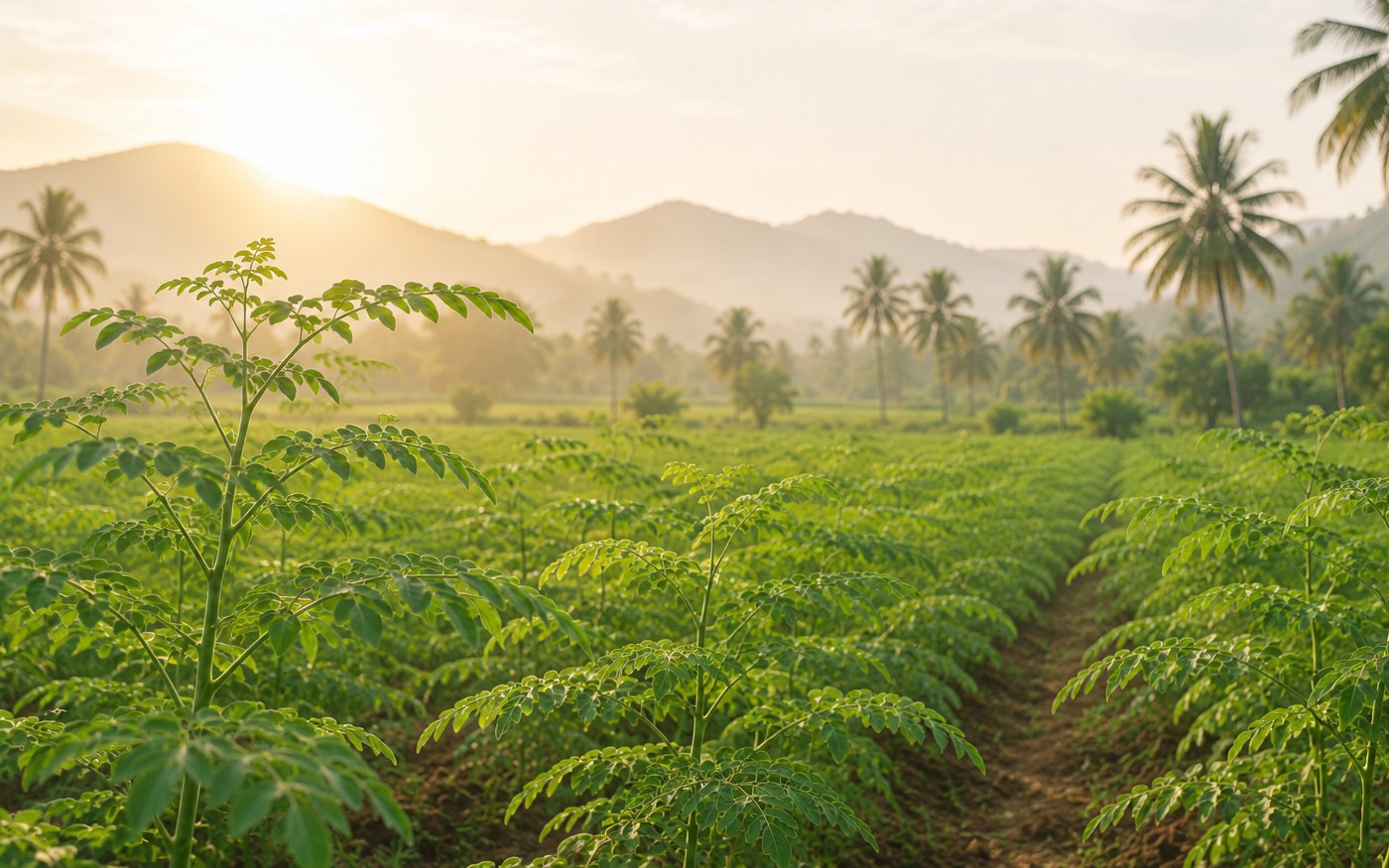
Not all moringa is created equal — and much of that difference comes down to where it's grown. Moringa from one region can differ in colour, nutrient density, and consistency from moringa grown a few hundred kilometres away. At Freshlen, we source from South India's moringa belt.
Moringa thrives in warm, semi-arid conditions — exactly what South India offers. Tamil Nadu, Karnataka, and Andhra Pradesh sit in moringa's ideal zone: steady heat, well-drained soil, long sunshine hours. Stable growing conditions produce stable crops — the batch-to-batch consistency wholesale buyers actually need.
Three factors set South India apart: decades of cultivation experience that have refined farming, harvest timing, and post-harvest handling; reliable year-round supply from a dense growing belt; and local processing facilities that protect nutrient content by shortening the time from harvest to drying.
Soil and water quality also affect heavy-metal uptake — moringa is a known accumulator of metals like lead and cadmium. Sourcing from established, well-understood farmland is food safety at the root, before any lab test. You get the colour, potency, and consistency international buyers expect — backed by NABL-accredited testing to prove it.